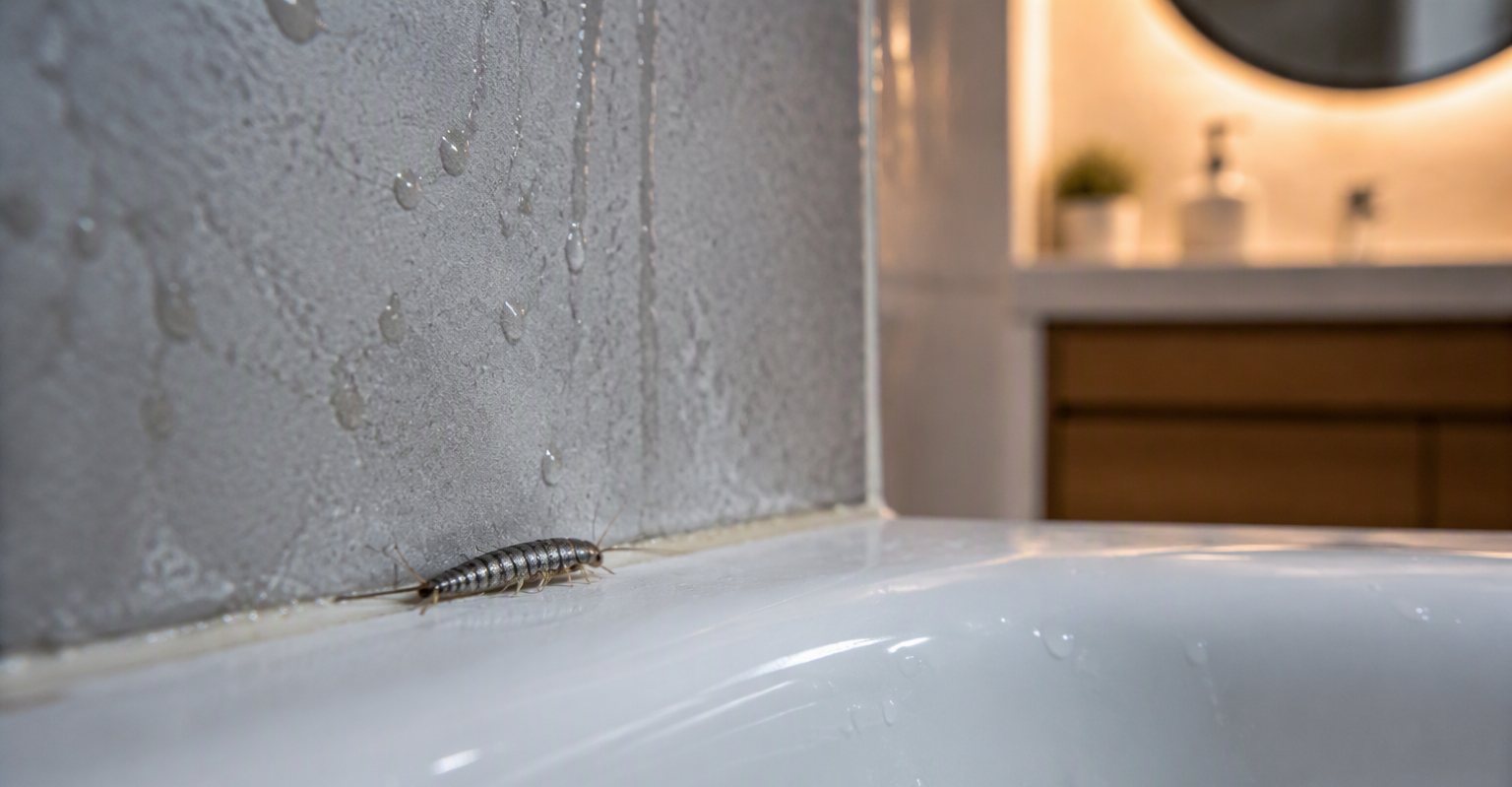
Silverfish run on one requirement: damp air. A bathroom that stays humid — the fan that’s too small, too short-cycled, or vented into the attic instead of outside — is prime territory. Add the room’s food supply and the lease is signed: silverfish eat starch and protein, which in a house means book bindings, wallpaper paste, cardboard, photographs, and the sizing in fabrics. The bathroom draws them in; the linen closet and the bookshelf keep them fed.
Reading what they’re telling you
- One in the tub occasionally: the tub and sink are where they get trapped, not where they live. One a week is background; nightly sightings are a population.
- Yellow stains or tiny scales: their droppings and molted skins mark the hiding zones — baseboard gaps, under the vanity, behind the toilet.
- Damage elsewhere: irregular holes in paper goods, etching on book bindings, or grazed wallpaper paste in other rooms means the bathroom was just the entry point.
Why the trap jar never finishes the job
Jar traps and sticky cards catch the foragers you would have seen anyway. The population lives in the wall voids, the subfloor gap under the tub, and the attic insulation above the bathroom ceiling — anywhere the humidity reaches. Trapping without dehumidifying is mowing a weed.
The fix that holds
Run the exhaust fan twenty minutes past every shower (a timer switch makes it automatic), confirm it vents outside — not into the attic — and seal the baseboard and plumbing gaps where they harbor. A desiccant treatment in the voids plus targeted bait handles the established population; the humidity correction makes sure there isn’t a next one. If the fan is undersized for the room, that’s the honest first fix, and any handyman can swap it in an afternoon.
Silverfish on the night shift? Call (844) 611-1789 — we’ll treat the voids, and tell you straight whether the fan or the weather is the real driver.