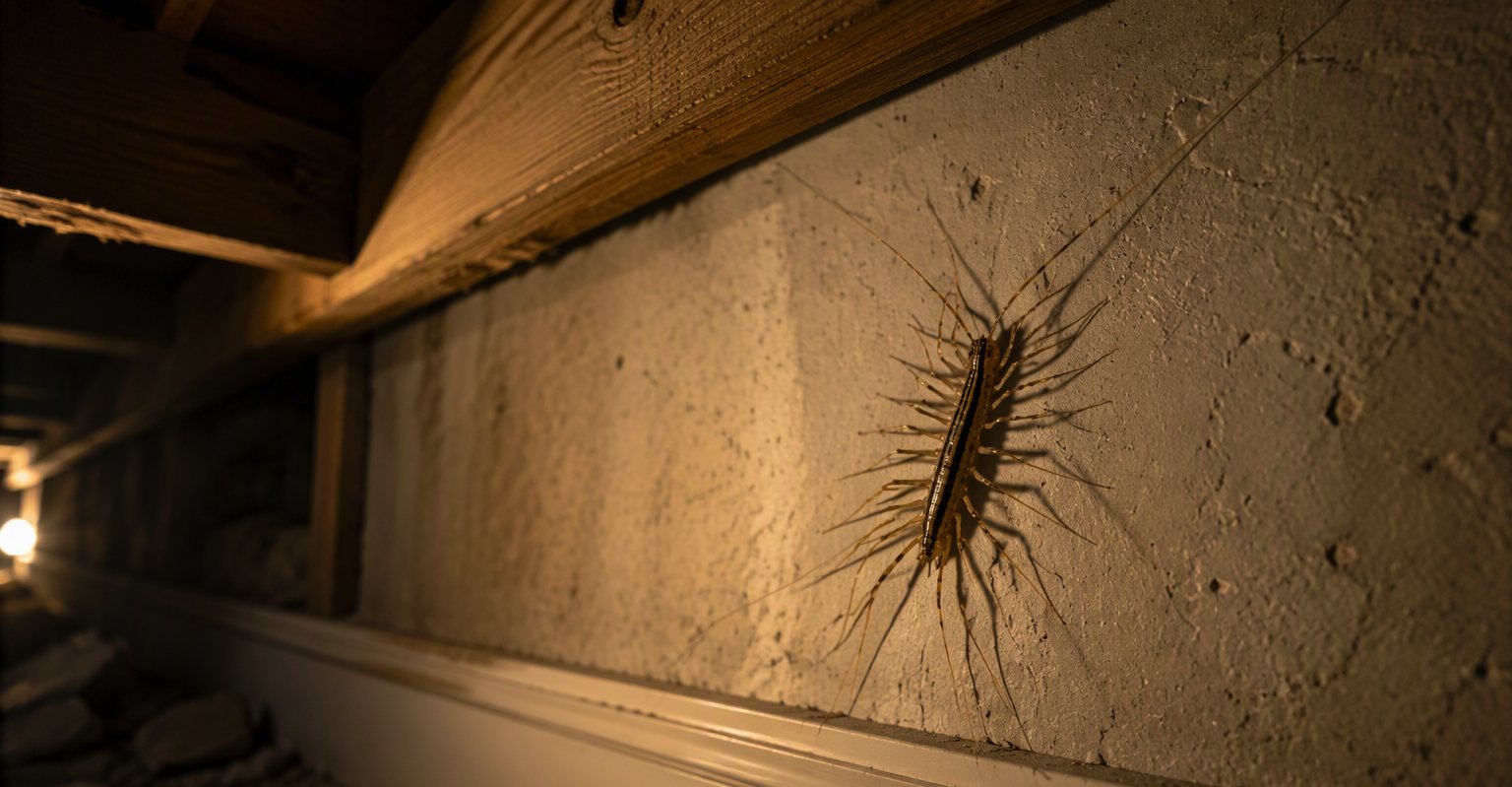
First, the twist: the house centipede is a predator, and a good one. It eats roaches, silverfish, spiders, carpet beetle larvae, and termites. A centipede in your basement is not the infestation — it’s the alarm bell ringing about the infestation. Where centipedes patrol regularly, there’s a prey population steady enough to feed a hunter. That’s the finding that matters.
Why your basement specifically
House centipedes need two things: humidity and prey. Canton basements deliver both — clay-soil moisture wicking through the foundation, floor drains and sump pits holding standing water, and a quiet, undisturbed food web of moisture-loving insects. The centipede is simply the biggest, fastest resident of an ecosystem that started with damp air.
What their numbers tell you
- An occasional sighting: normal. They wander in from outdoors and from neighboring voids. One a month is background noise.
- Regular sightings, especially in daylight: the prey population is established. Centipedes hunting openly are working a reliable food source.
- Juveniles of several sizes: they’re breeding in the house, which means the buffet has been open for at least a season.
The fix that actually lasts
You can chase centipedes with a shoe forever and change nothing, because the shoe doesn’t address the menu. The working order: cut the moisture (dehumidification sized to the space, floor-drain traps kept wet or sealed, the foundation’s vapor entry managed), knock down the prey population, and seal the gaps around plumbing and the sill where everything enters. Take away the water and the food, and the predators resign on their own.
Centipedes on regular patrol? Call (844) 611-1789 — we’ll read what they’re telling us, treat the whole food web, and dry the basement that feeds it.