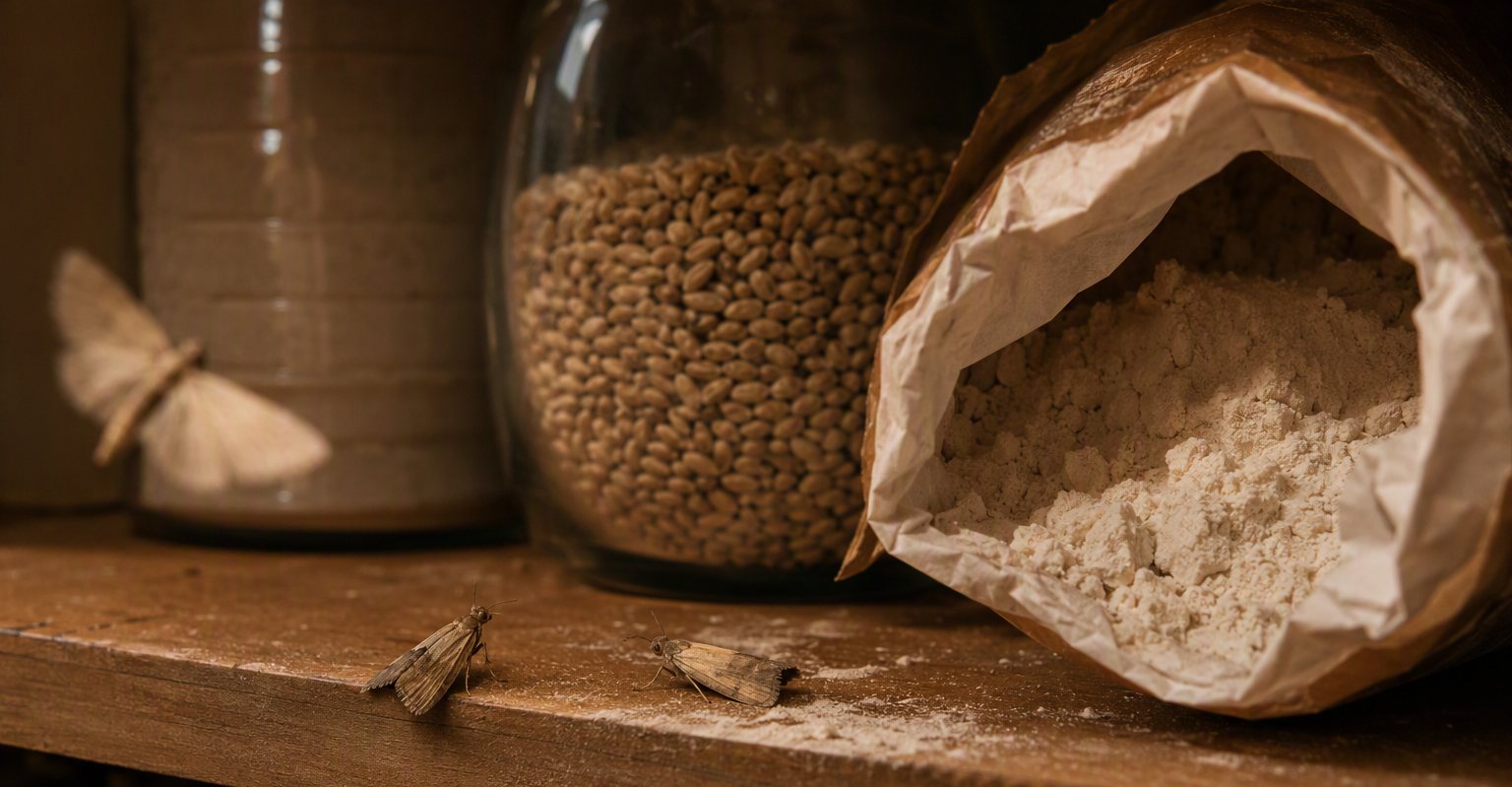
The Indian meal moth almost never flies in through a window — it rides home in the groceries. A bag of flour, birdseed, pet food, or bulk-bin nuts arrives with eggs already inside, and the larvae hatch into your pantry like they own the lease. One contaminated bag, left long enough, seeds every open package on the shelf.
Where they actually hide
Everyone checks the flour and stops there. The larvae don’t. Before they pupate they wander — which is why the moths reappear after you throw out one bag:
- Unlikely foods: spices, chocolate, dried fruit, tea, that decorative jar of beans, the dog’s treats, the birdseed in the garage.
- Package seams and lid threads: larvae spin webbing in the grooves of screw-top lids and folded box tops you’d swear were sealed.
- Shelf-pin holes and corner joints: the classic pupation spots — tiny cocoons tucked into the hardware of the cabinet itself.
- Behind and under the appliance: spilled grain dust under the fridge or stove is an unmonitored nursery.
The reset, in order
Empty the pantry completely — everything comes out. Inspect every package: webbing, clumping, or tiny worms means the trash, outdoors, today. Vacuum every shelf, corner, and pin hole, then wash with soapy water (skip the pesticide near food — it’s unnecessary and wrong for the space). Re-stock only in hard sealed containers — glass or thick plastic with real gaskets — and quarantine new bulk items in the freezer for four days before they join the shelf. Pheromone traps then stand guard: they catch the males and, more importantly, tell you within a week whether anything survived the purge.
Moths outlasting the purge? Call (844) 611-1789 — a targeted treatment reaches the voids a vacuum can’t, and the follow-up confirms the siege is over.