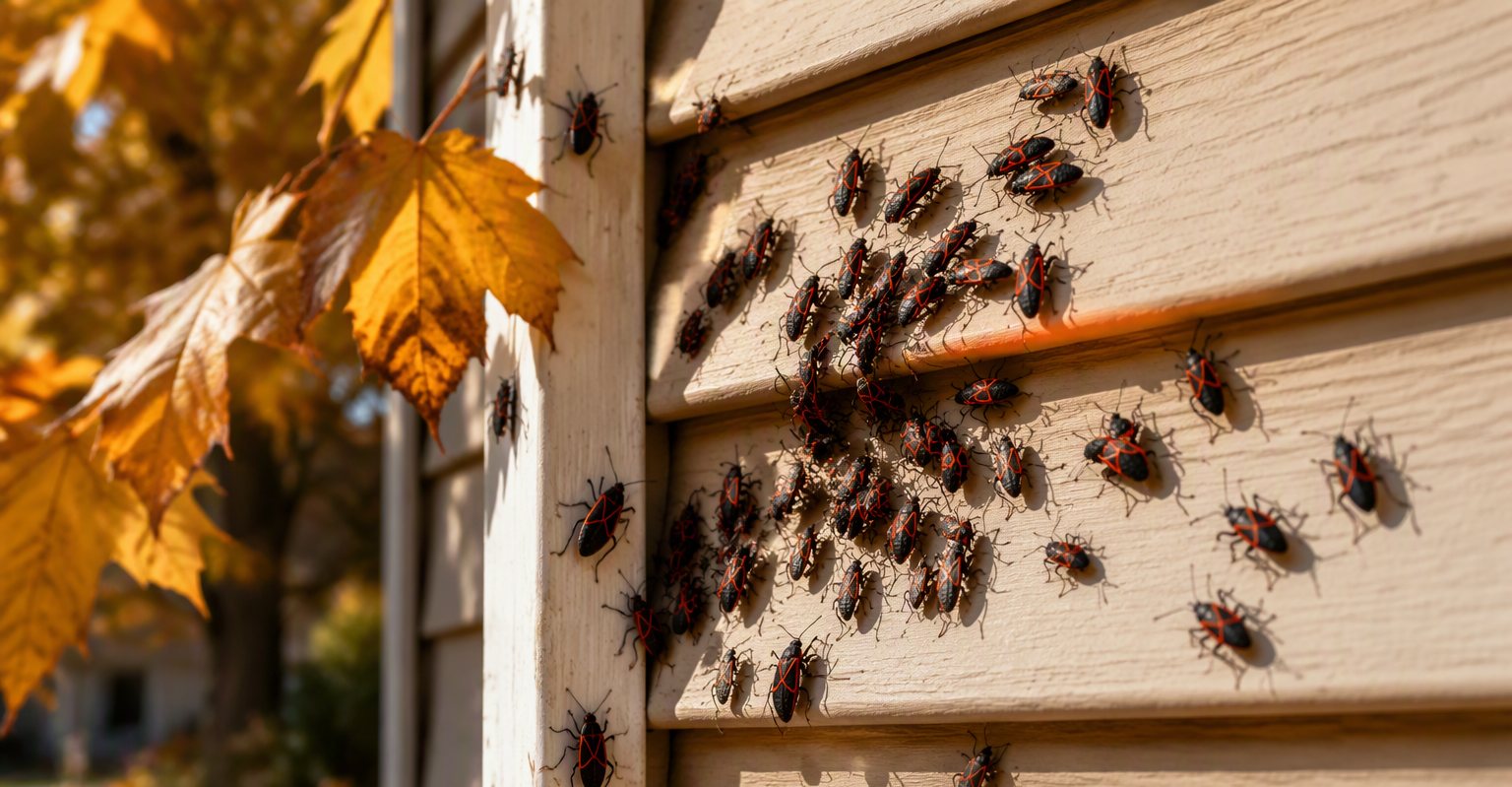
Boxelder bugs spend summer feeding quietly on boxelder, maple, and ash seeds in the tree canopy, bothering no one. Fall changes the assignment: they need an overwintering void, and your house — sun-warmed siding by day, wall voids behind it by night — is the tallest, warmest tree in the neighborhood. The wall gathering is the staging area; the ones that find a gap move inside and sleep in your walls until April.
Why the same houses every year
- Sun exposure: south and west walls hold afternoon heat longest. The bugs are literally picking the warmest real estate.
- Entry architecture: gaps at siding joints, window frames, soffit returns, and utility penetrations decide how many of the wall-sitters become wall-sleepers.
- Host trees nearby: a female boxelder or seed-heavy maple within a few hundred feet keeps the local population well-stocked.
Why crushing them backfires
Crushed boxelder bugs stain paint and drapery with a dye that doesn’t wash out easily — and the odor of crushed bugs can attract scavenger beetles into the same voids. Vacuuming is the clean indoor move (bag straight to the trash). But the real mistake is treating October’s wall gathering as the problem itself. It’s the preview. The problem is the entry gaps they’re about to use.
The September play
The win happens before the gathering: a late-summer exterior treatment of the sunny elevations plus sealing of the top entry zones — window frames, siding joints, soffit lines. Houses that get the September play barely notice October. Houses that skip it spend the winter vacuuming bugs out of sunny window tracks and meeting them again at spring thaw, when the survivors wake up and try to leave.
Walls going black and red? Call (844) 611-1789 — the squad handles the gathering, the entries, and next spring’s wake-up call in one visit.