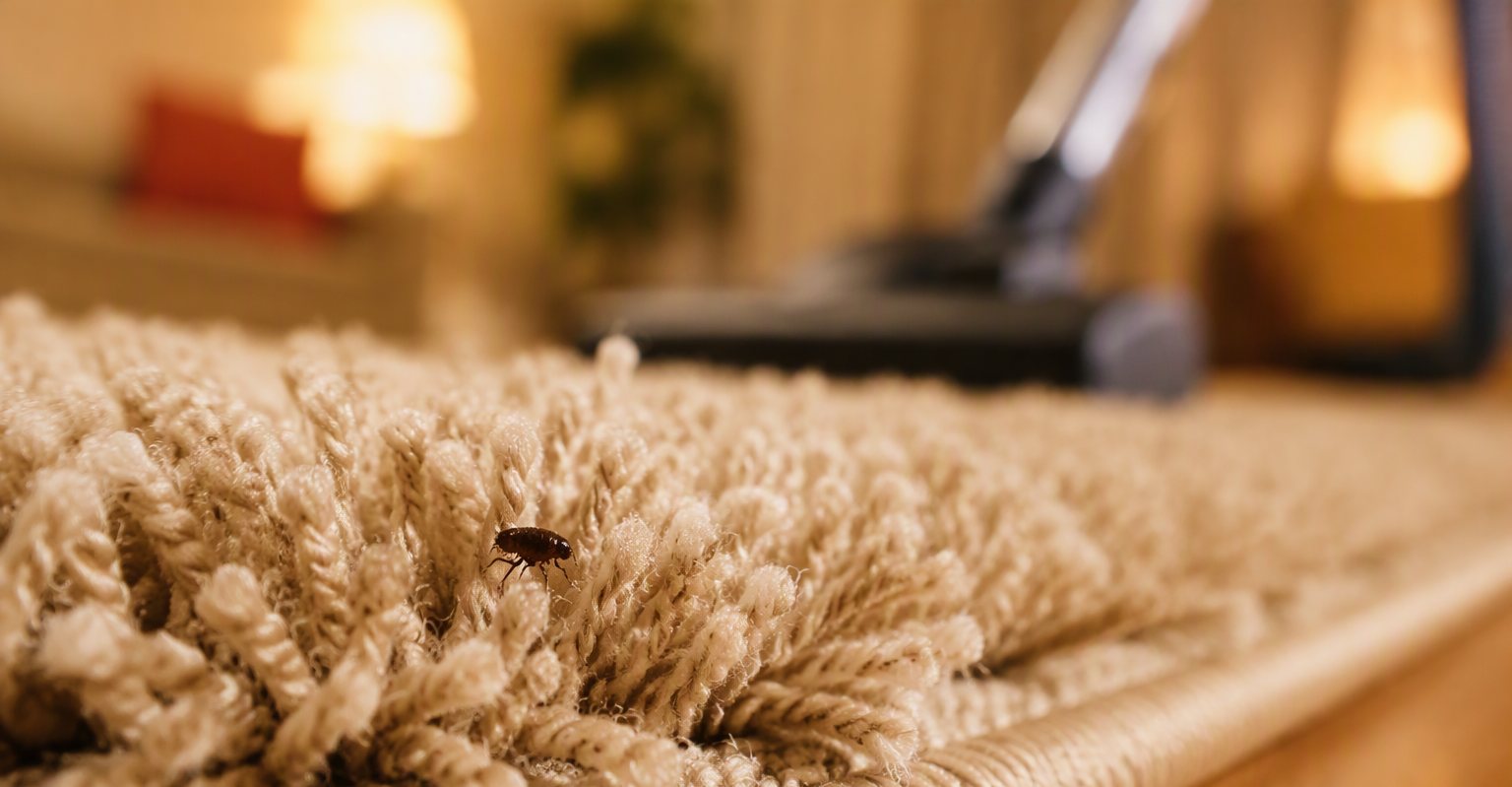
The fleas biting you are only the adults — about five percent of the infestation. The rest is eggs, larvae, and pupae distributed through the carpets, baseboard edges, furniture seams, and floor cracks, on a timer set by the last animal that lived there. Flea pupae can sit dormant for months, waiting for the vibration and warmth of a host. A vacant house “wakes up” when you move in; a pet sit wakes up the spare room the dog slept in. You didn’t bring the infestation — you volunteered as its alarm clock.
The usual delivery routes
- Visiting animals: the weekend guest dog, the cat you agreed to watch — even an animal that looks perfectly clean can drop eggs that hatch weeks later.
- Previous occupants: dormant pupae from the last tenant’s pets, hatching on your arrival. A classic in rentals and just-sold homes.
- Wildlife: raccoons, opossums, and feral cats denning under the deck or in the crawl space seed the yard, and fleas ride in on your own socks.
Why the one-spray weekend fails
Eggs hatch in days, larvae develop in one to three weeks, and pupae sit armored in their cocoons for months — no household spray reaches all four stages at once, which is why fleas “come back” ten days after a treatment that clearly killed everything. They didn’t come back. The next class graduated.
The protocol that ends it
Vacuum aggressively and daily — floors, furniture seams, pet-visited rooms — with the bag or canister straight outside; vibration and warmth trigger the pupae to hatch, which is exactly what you want before treatment. Then a professional two-stage treatment: an adulticide for the biters plus an insect growth regulator that sterilizes the eggs and larvae, with a timed follow-up for the final hatch. Wash every textile the animal touched on hot. If wildlife under the deck is the source, that gets addressed too — otherwise next summer re-seeds the yard.
Ankles under attack? Call (844) 611-1789 — the squad clears every life stage and finds the source, pet or no pet.