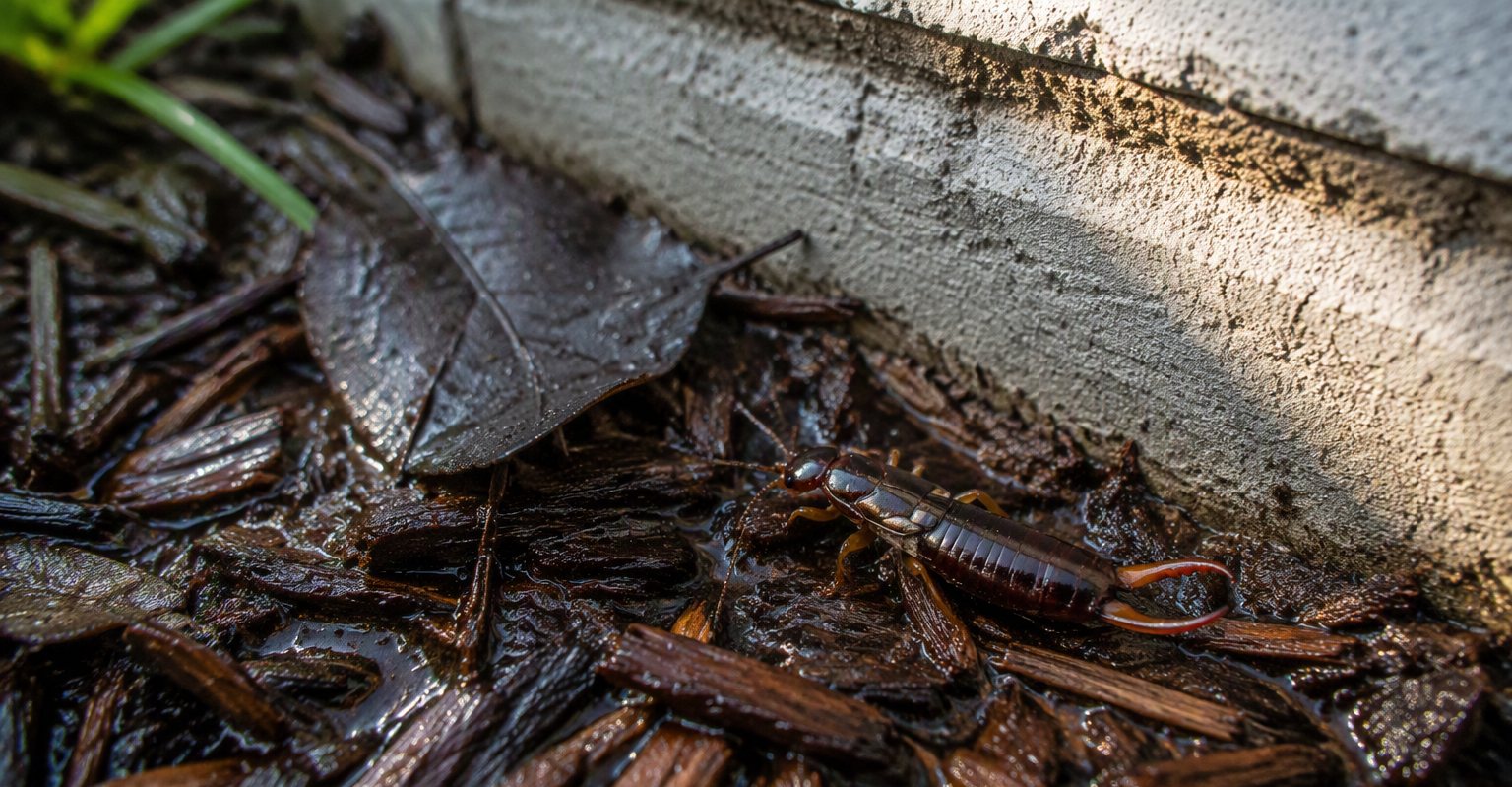
Earwigs live in the top few inches of damp soil and mulch, doing quiet work as decomposers. A saturating rain floods that layer completely, and the entire population does what any flooded-out resident does: moves to higher, drier ground. Your foundation wall is the high ground; the gap under the door sweep and the basement window well are the border crossings. The migration is weather-driven, which means the fix is perimeter-driven.
First, the folklore, settled
Earwigs do not crawl into ears, do not lay eggs in brains, and do not bite. The pincers are for defense and courtship, and a startled pinch is the worst they offer. They’re a nuisance, not a hazard — but a hundred nuisance bugs in the basement earns a response all the same.
Why some houses get the wave and others don’t
- Mulch against the foundation: a moist earwig habitat pressed directly against the wall — the single biggest predictor.
- Downspouts dumping at the corner: chronic wet soil along one foundation run concentrates the population at your border.
- Door sweeps and window wells: a worn sweep gap of a quarter inch is a four-lane bridge during a migration.
- Basement humidity: the houses that keep them after the rain are the ones damp enough to feel like home.
The perimeter play
Pull mulch and leaf litter back from the foundation — six inches of bare buffer beats any spray. Extend downspouts so roof water lands away from the wall. Replace the tired door sweeps. Then a residual perimeter treatment along the foundation, door thresholds, and window wells intercepts the migrants during the wet weeks — the difference between a house that hosts the migration and a house that watches it happen to the neighbor’s mulch bed.
Earwigs marching after every storm? Call (844) 611-1789 — the squad seals the border and treats the perimeter, rain or shine.